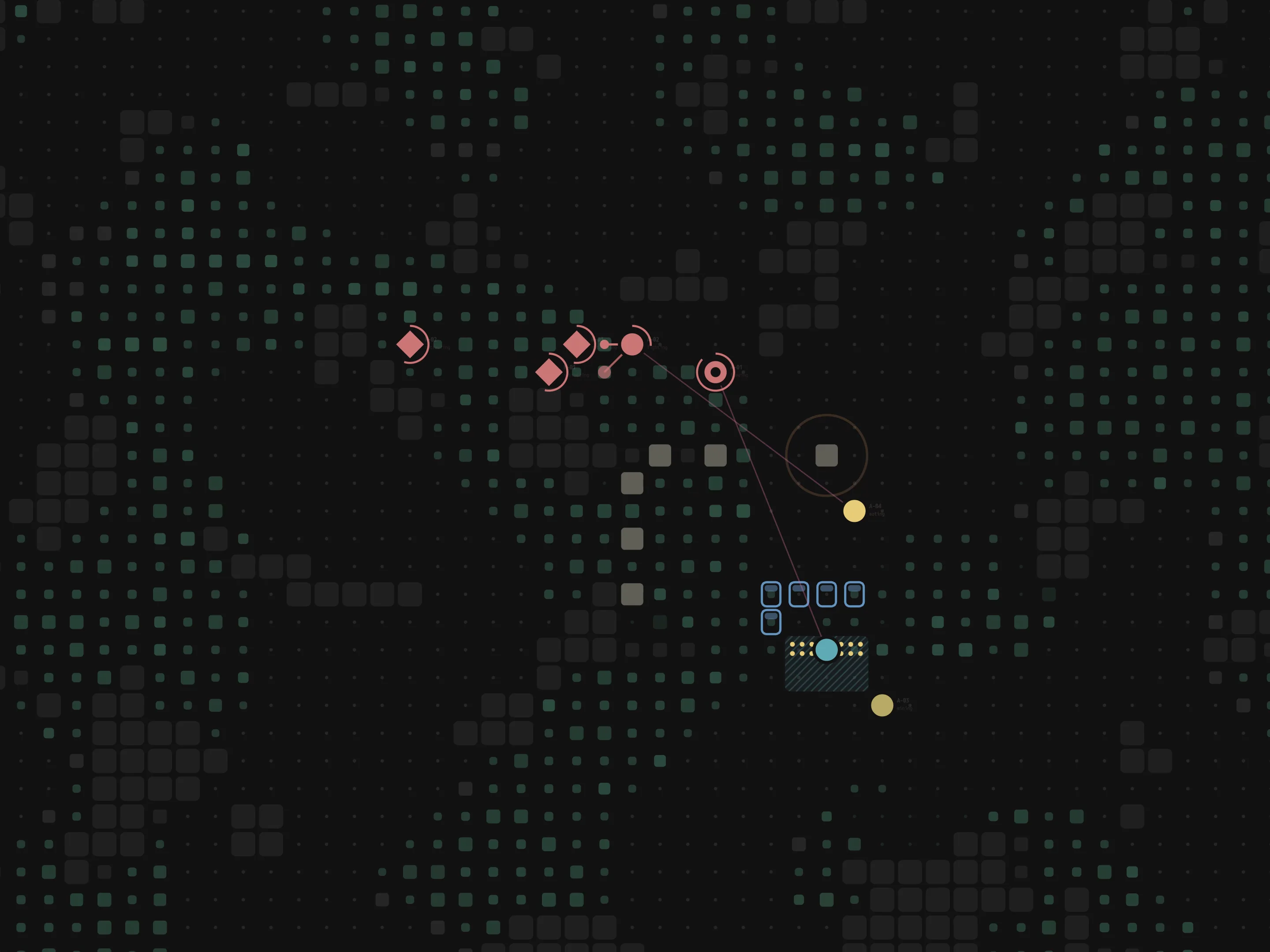
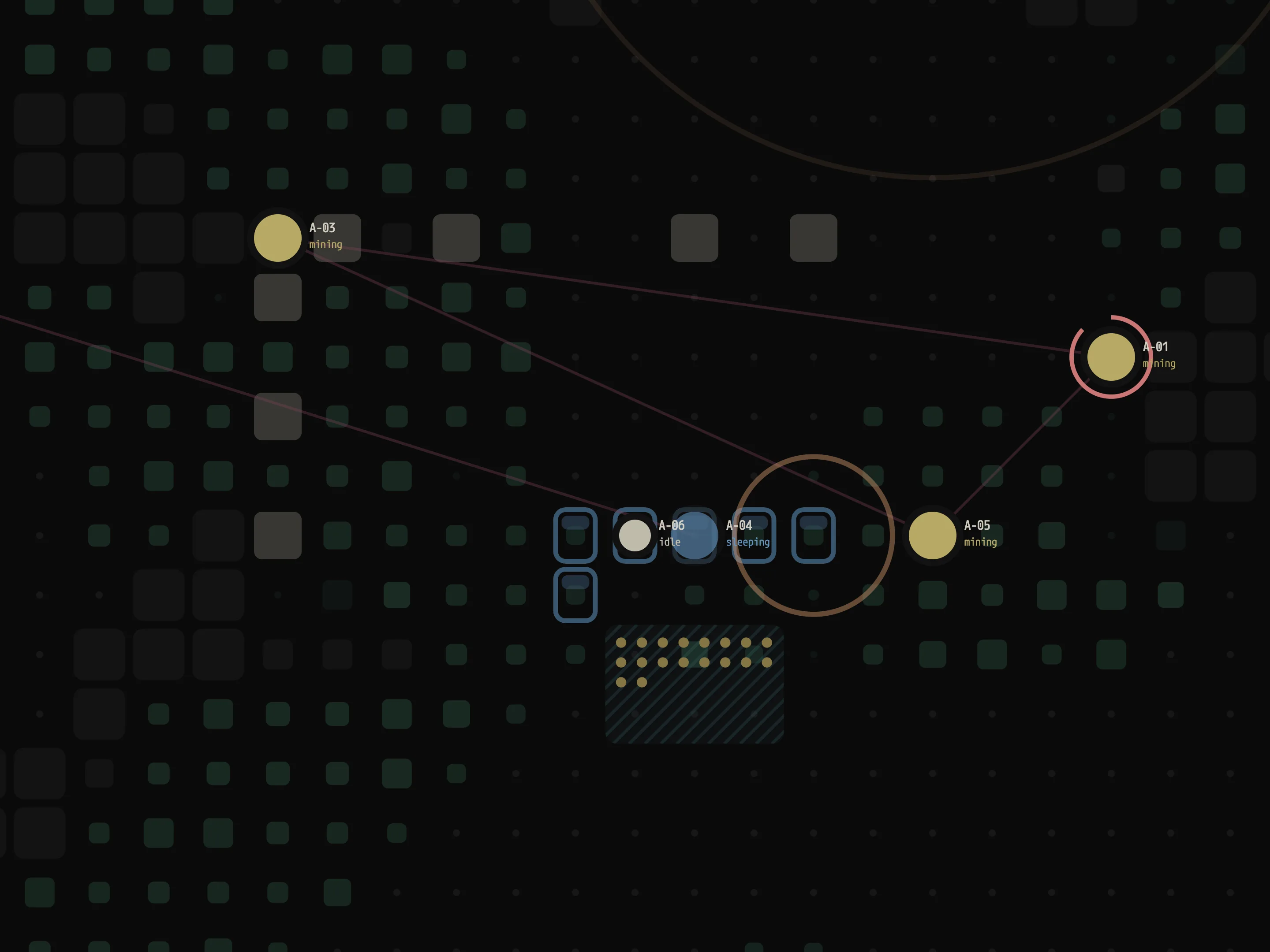
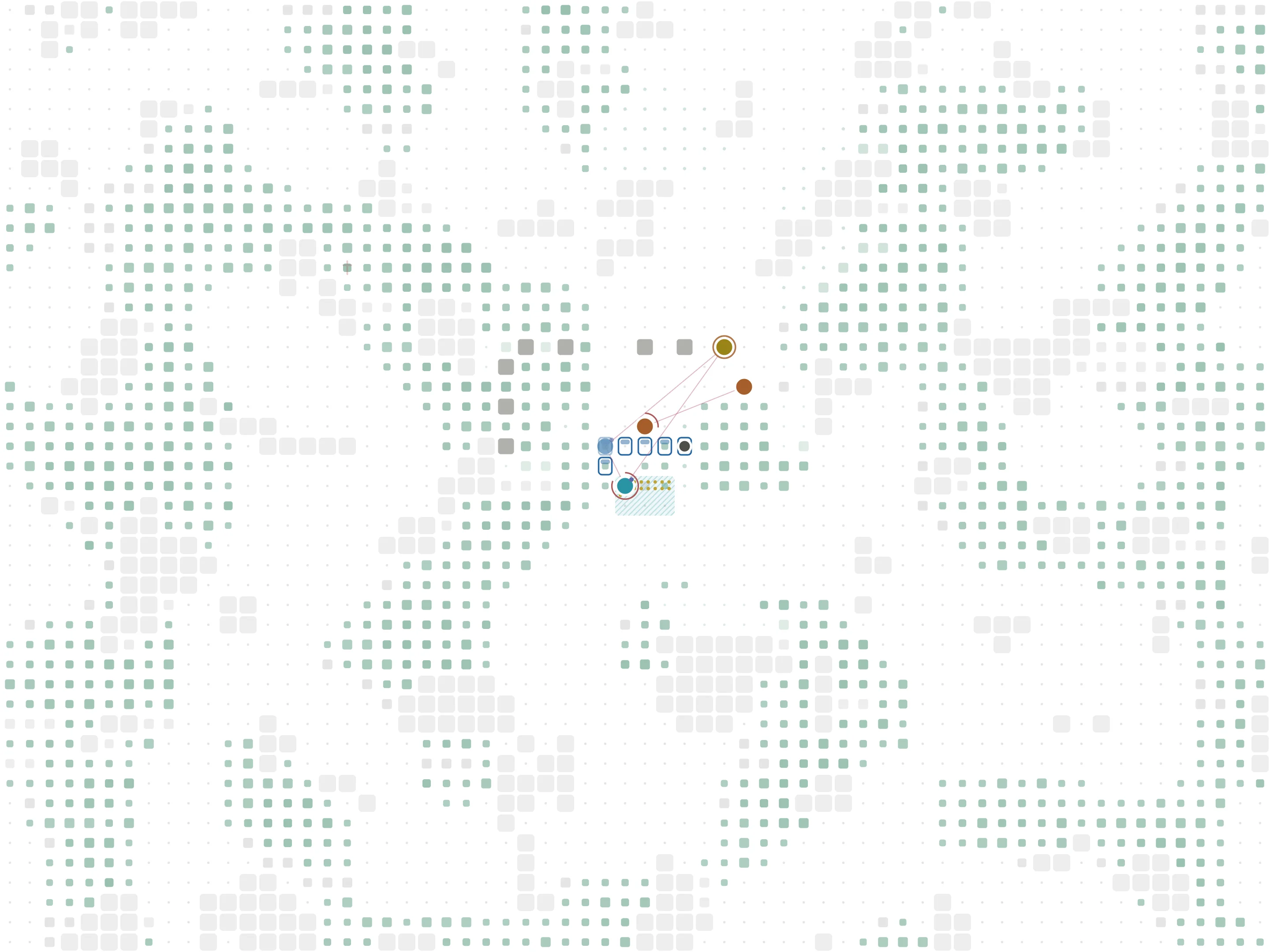
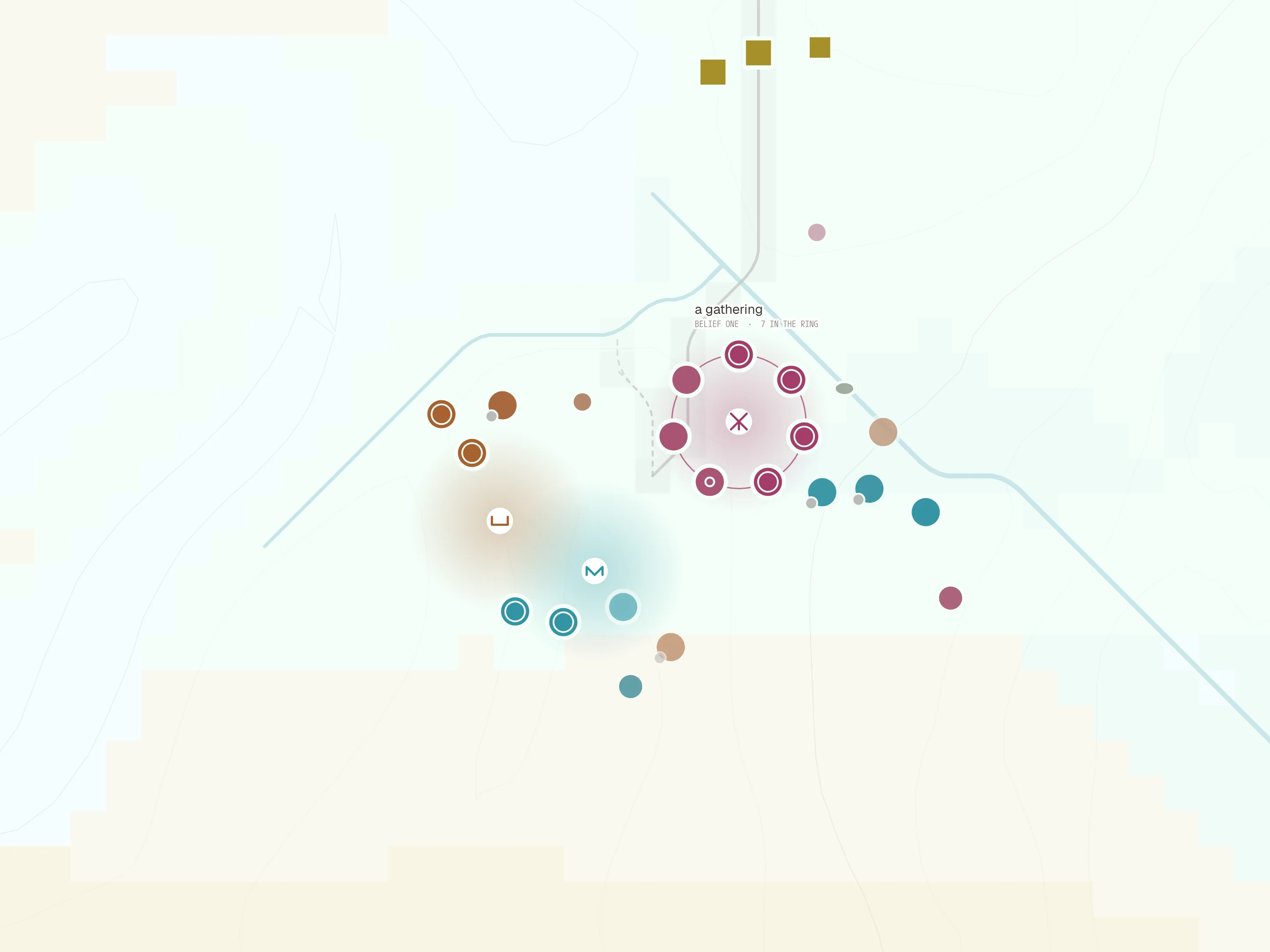
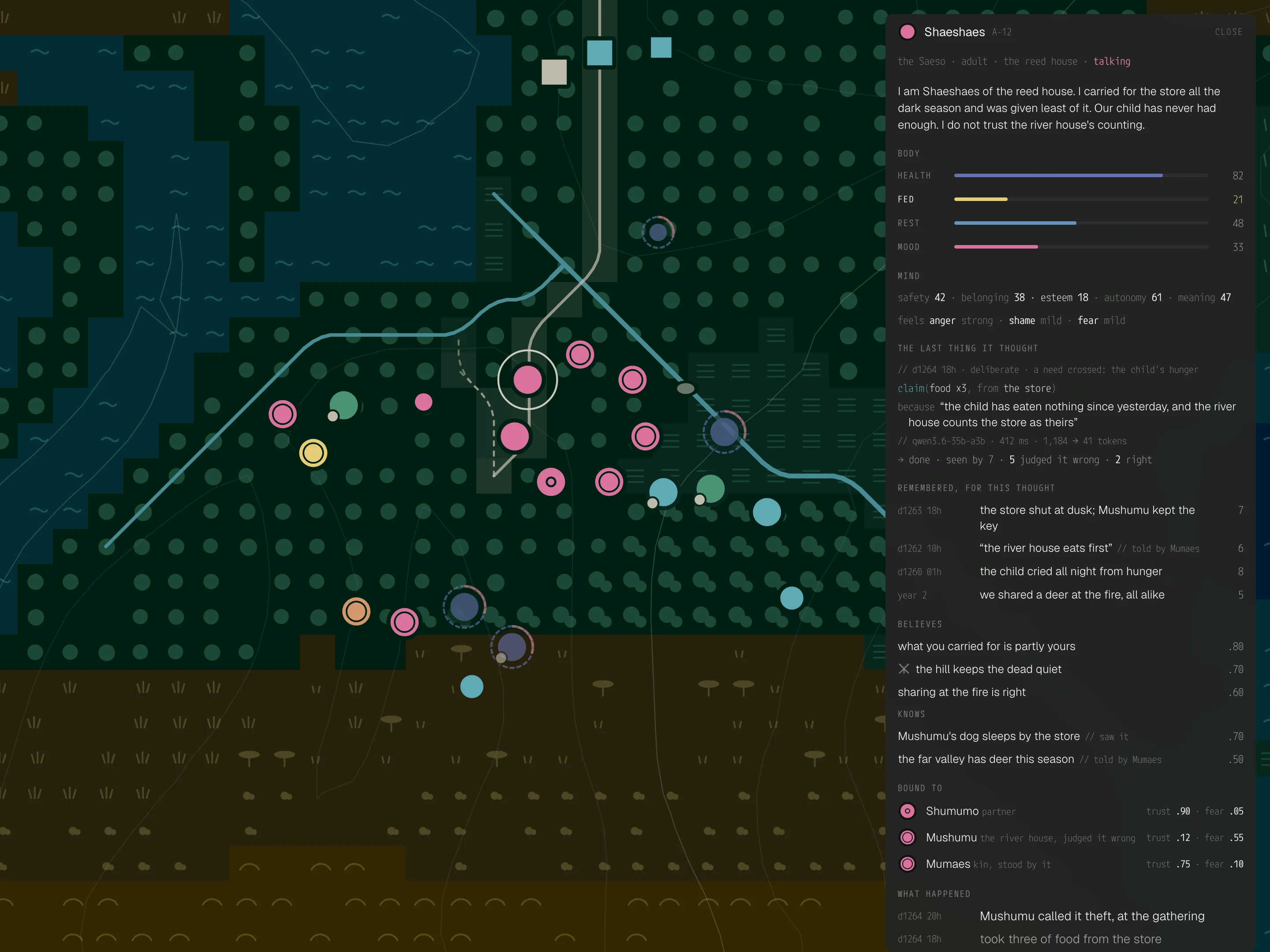
Boids drops a handful of agents onto a seeded landscape and steps back. Each carries needs (hunger, rest, mood, health) and traits like coward, volatile or kind, and every tick it chooses its own work: fight or flee, eat, sleep, forage, haul, mine, build, or spend the evening with someone. Nothing is scripted. Bonds, births, mental breaks, mourning, plague and starvation come out of those choices, and a storyteller presses on them with raids, blight, cold snaps, wanderers and cargo, each reported as a letter.
The world is a pure function of its seed, and it runs without a screen. A runner keeps it going unattended for as long as it is left, writes every tick to a tape, and survives being killed: a run cut off mid-way resumes to the same end, tick for tick. The observatory is how you watch it, a local world live, a recorded run replayed from its tape, or one still running, with the camera in the reader's hands and a card for whoever you click. A tape replays pixel for pixel as the world first drew it, which is what lets any moment export at 4K.
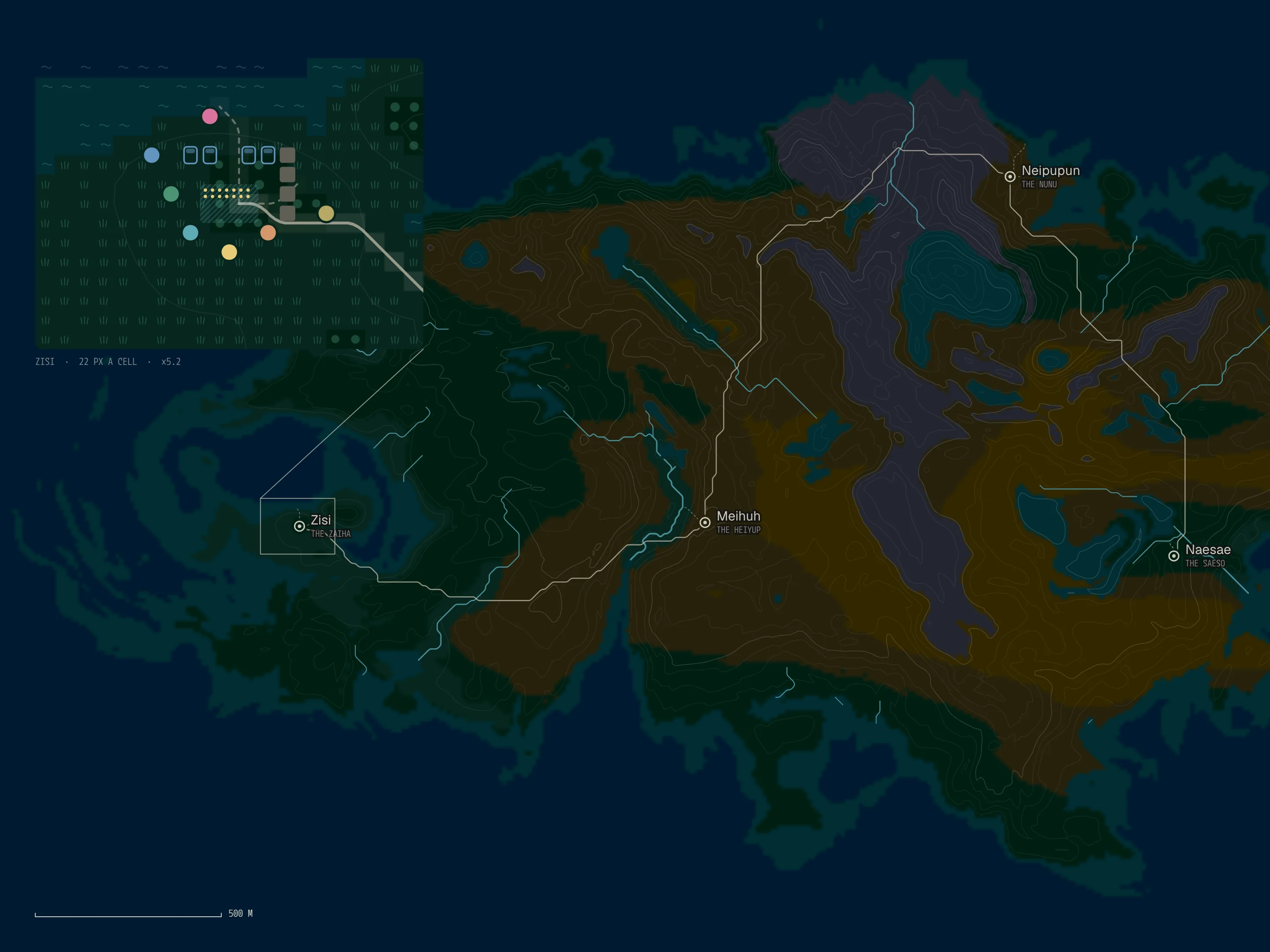
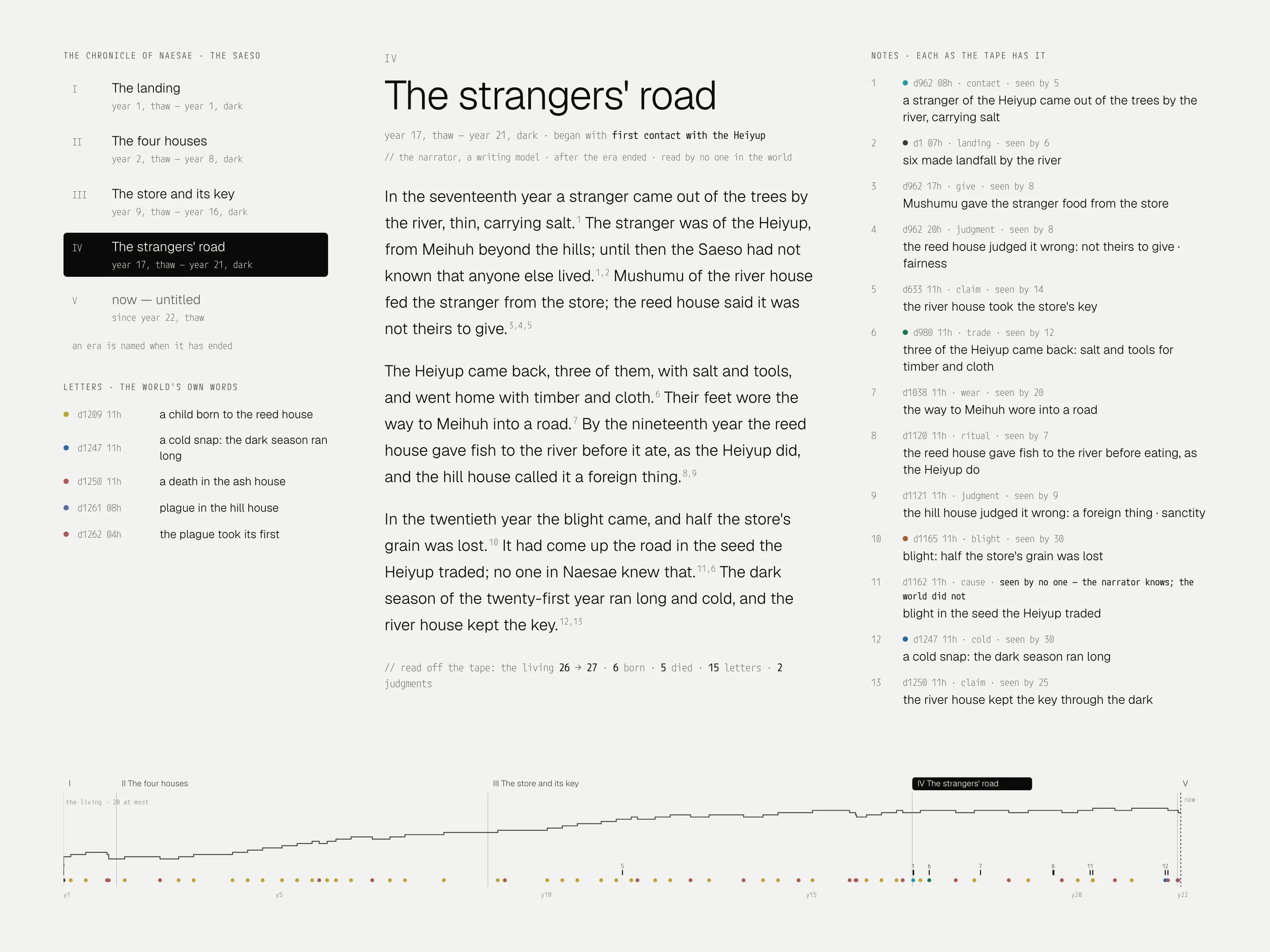
Next the agents get minds of their own, run locally, and the world grows to fit them: a generated continent with seasons, several peoples told apart by shape, lenses for belief, kinship, trade, disease and judgment, and a chronicle whose narrator must cite the events behind every sentence. Those are designed already, as frames drawn by the world's own code over invented data, and four of the shots here are from them. What the agents make of it becomes the subject of a research paper.